The Hard Work of Everyday Life.
So for me, Bekahroo, what was everyday life like while I lived overseas? It was totally different from yours. Mine was more like what you call camping. But I did it 24/7, hence the “everyday”.
For the first 6 years of 10, I didn’t have a bed. I slept Kazakh style, on heavy mats stuffed with raw cotton, which doubled as blankets in the winter. To this day I still prefer a firm bed to a soft one, and I enjoy the floor. I hated the bed I had even after I got it. After three months the nasty piece of junk started stabbing me here and there with wires. Springs sprouted out at the foot of the bed, shredding the sheets. I was glad to leave that item behind.
Another thing that was hard work was my schoolwork. Once I hit high school, Mom could no longer teach me the math and sciences I needed, so she put me on a DVD program, which I really enjoyed. Everything was taught from a Christian view. I loved it. It was peachy keen. Cool. Hip. Until late fall fell. By then the water in the reservoirs up in the mountains were low or out of water. There wasn’t enough electricity to cover the entire city. So the different neighborhoods around the city were put on a strict schedule of two hours on, two hours off. I couldn’t run our DVD machine or TV. I was worried all throughout the autumn and most of the winter about falling behind in my work. This happened with the power every year. How could I keep up year after year?? Would I graduate a year late because of this? The solution ended up being twofold~ When the power was out, I would go up to Dad’s office and use the English center’s DVD machine and TV. That meant walking half a mile with all the books I needed. IF the office had power. The other half of the solution was to slave through the summer. No summer break. 6 months of baking and sweating, sticking to your chair. And trying to study. It’s like something out of a Dickens or Bronte novel. Yeah, Studying wasn’t easy.
Another part of everyday life was how I did my chores. We were OFTEN without our five stars: electricity, or running water, or phone, or internet, or propane with which to cook. A five star day could easily turn into a three star day because of something as simple as a rainstorm. We found out that guests are jinxed. They make you run out of propane when you’re making pizza. But, I have found that the two most valuable of the stars are running water and electricity. They work in tandem to run a washing machine. Without one or the other, it doesn’t work. Without water you flat out cant’ wash your clothing. Without electricity though, you become the washing machine. You’re a robot. Your task is to do the same thing all day long. If it’s summer, you’re outside in 110 or hotter weather. But at least the liquid coming out of the hose is coolish. I found that a pair of jeans feel heavier wet. They don’t ring out so well. They drip on you from the line above you as you’re scrubbing the rest of the clothing. The soap doesn’t dissolve and rubs your ringers raw. Most importantly though, you get used to wearing the same thing for several days.
Another everyday chore that was made difficult was something bazaar, not bizarre- it was “everyday” after all, in the realm of “hard chores”. It was shopping. Shopping here is a treat. Understand, that we had no neat and clean aisles to walk down. We had no air conditioning or heat. We had no anti-odorous meat racks (or whatever they’re called). We had no cars of our own to drive. We had a bazaar we got to visit. Crooked row after crooked row of booths. Each seller had his or her things neatly stacked in bins or tied down to keep them from . There were broken “sidewalks” to walkover as we carried our sacks of produce. Not too easy with 12-15 kilos of food in each arm. In either 110 or -20 degree weather. Buying meat was the worst thing on the list. There were two meat halls. The religiously proper one, and the religiously IMproper one. The first had all it’s meat slaughtered with the animal in question’s head pointed towards Mecca, and blah, blah, blah, it had no pork…. And it stank. Bad. Really bad. The other was essentially the same, but it sold pork, was in a basement, and Russians and Uzbeks instead of Kazakhs sold the meat. All the meat, guts, brains, hooves, and other various edibles are hung up on hooks in a big room. The sellers hack away at ribs and other bones. There’s blood on the floor. There are sheep heads staring eyelessly at you. The corner over there has a cow udder for sale. There are flies everywhere. At least the fish are sold outside. You, as the buyer, are supposed to go into this stinking, slippery-floored slum for your weekly meat. Yup. Everyday.
So yes, everyday was hard. It exhausted me. Did I enjoy it? Absolutely. Would I trade my childhood for one in another country? Absolutely not. It taught me so many things I couldn’t have learned anywhere else. Just today we came close to needing to hand wash our clothing, I wouldn’t have been able to do it if I hadn’t been taught. Being able to shop in a beautiful clean place is a joy. Never running out of propane is a relief! I can cook endlessly! The power only goes out occasionally. Life overseas taught me how to be a better troubleshooter. So much travelling with my family prepared me to travel alone so I could help my grandpa. The life God gave me has put me where I am now, He has given me the friends I have now, and I love them all. I wouldn’t wish myself in a different place in a million years.
Sunday, August 21, 2011

Monday, August 15, 2011
The "Hard Work" of Living in a Developing Country- Pt. 6
As I look back on the various tolls living overseas exacted on body and soul, it might be good to take a brief glimpse into the heavy wages paid in terms of “items lost”. Physical trinkets may immediately come to mind, but there is such a variety of other, more costly effects, that were so much more precious to be lost.
The first thing one must give up when living abroad is his sense of control. That goes out the window in about the first 3 hours of landing. Control over how fast your taxi will drive you into town, and whether or not he will have chosen beer or vodka as his liquor of choice; control over having the washing machine of your choice- heck, even having one at all for the first month might be an enormous luxury; control over whether your children will have vaccinations, enough fresh fruits and vegetables to eat (for the first 3 winters, we ate ONLY carrots, onions, potatoes and cabbage for 5 months straight) or enough children’s Tylenol when the fevers got too high. If you think control over who was listening to your phone, who was watching you outside your window, or who was following you onto the train for a ride across the country, forget it. They controlled all of that. One area of control that was particularly hard to endure was control over censoring information that might make loved ones (especially parents/grandparents) overly concerned or worried. News media can paint a frightening picture of the real stories and, on the other hand, it’s hard to make the kids, especially if they are young, understand that not everyone needs to hear everything.
We were told very clearly to “count the costs” by many trusted and close friends before we left, but some things just can’t be anticipated, nor can one even begin to imagine all that could be demanded living away from home, culture, family, friends, and personal, treasured things and comforts. Not only is that ever-elusive “control” lost, but one’s sense of belonging is quickly snatched away, only to be bought back through hard work, rivers of tears, and an over-abundance of embarrassing mistakes and misunderstandings. Gone within minutes of landing is that safe, comfortable sense of “place” and security. When one is rooted in a certain set of “rules” and standard of behavior, it is nearly impossible on every level to find a new norm and be completely at home in it. Daily we struggled with everything from the simple ‘How do I talk on a bus (in our cases not at all)?’ and ‘How should my legs be tucked under me while sitting on the floor at someone’s dinner table?’, to the more complicated like, ‘What would be appropriate to say to my neighbor at a public wake who has just been widowed?’ and ‘What do I do when my neighbor comes to the door holding her child who is literally dying in her arms?!’
How can one “count the cost” when neither a pregnancy nor a revolution in the neighboring country had been anticipated? How can one come back to a country that has gone through its own crisis? Our family has almost no common or shared emotional connection to the rest of America who has witnessed 9/11 ; we saw none of the images, spoke to no one during that time, and only read the headlines weeks later in a borrowed magazine. While we were struggling to make a new normal, we utterly missed an entire decade of the “other” that made America a completely different place to come back to. We suffered the hard work of trying to relate to those who’d call and try to communicate the changes, but just could not. Another “item lost”…
It may be strange to say, or rather maybe even hard to believe, but I, in my heart of hearts, think our bodies took a much greater physical toll than if we’d lived here for the same 10 years. I won’t go into the litany of issues for fear of sounding like a whiner, but summer sun, heavy bags to and from the bazaar, the stress of everyday living, various falls on ice, constant stomach issues, and lack of nutritious food all add up to less healthy people. That was one cost we counted, and I have nothing to grumble about. It’s a reality we live with, and we count it as gain.
There were, of course, those “physical trinkets” we had to say good-bye to for a season. Some, over time, lost their meaning or dearness; others we yearned for year after year. Christmas was an especially melancholy time as almost every tradition was left behind. Dinners with extended family were impossible, fabulous meals with all the trimmings were suddenly gone, beloved decorations that held special meaning were not there. Instead was a 4 foot plastic tree that fell apart more and more every year, candy garlands hung on the tree in a lame attempt to make things colorful, and we listened to the same music over and over and over on the only 2 CDs of Christmas music we had. Of course, not all was lost. We eventually made friends and had Christmas dinner with them and our teammates. Care packages full of goodies arrived once in a while full of nice gifts like peanut butter and silk flowers, and we learned to make our own music to fill the gap.
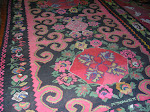
At first everything was new and exciting and we didn’t miss our “stuff”. But as time went on, our home began to feel bare and Spartan. We really longed for a few familiar things to remind us of where we’d come from. Unlike a lot of other host countries, ours had really no beautiful arts or crafts to offer in order to make a home inviting other than rugs. Ours was a country that had only recently gotten their independence, and had not been open to free market trading for very long. The only goods that regularly came in were low quality and purely functional- not meant for making a house a home. I longed for pictures on the walls of my loved ones, vases of fresh flowers, even just a simple throw pillow to brighten up our floor (we didn’t have a couch and chairs until well into our 3rd year). I never thought I’d be one to dwell on “stuff”, but I found myself missing those boxes packed away, hoping that they were safe until the day we could see it again.
Continued Next Time….
The first thing one must give up when living abroad is his sense of control. That goes out the window in about the first 3 hours of landing. Control over how fast your taxi will drive you into town, and whether or not he will have chosen beer or vodka as his liquor of choice; control over having the washing machine of your choice- heck, even having one at all for the first month might be an enormous luxury; control over whether your children will have vaccinations, enough fresh fruits and vegetables to eat (for the first 3 winters, we ate ONLY carrots, onions, potatoes and cabbage for 5 months straight) or enough children’s Tylenol when the fevers got too high. If you think control over who was listening to your phone, who was watching you outside your window, or who was following you onto the train for a ride across the country, forget it. They controlled all of that. One area of control that was particularly hard to endure was control over censoring information that might make loved ones (especially parents/grandparents) overly concerned or worried. News media can paint a frightening picture of the real stories and, on the other hand, it’s hard to make the kids, especially if they are young, understand that not everyone needs to hear everything.
We were told very clearly to “count the costs” by many trusted and close friends before we left, but some things just can’t be anticipated, nor can one even begin to imagine all that could be demanded living away from home, culture, family, friends, and personal, treasured things and comforts. Not only is that ever-elusive “control” lost, but one’s sense of belonging is quickly snatched away, only to be bought back through hard work, rivers of tears, and an over-abundance of embarrassing mistakes and misunderstandings. Gone within minutes of landing is that safe, comfortable sense of “place” and security. When one is rooted in a certain set of “rules” and standard of behavior, it is nearly impossible on every level to find a new norm and be completely at home in it. Daily we struggled with everything from the simple ‘How do I talk on a bus (in our cases not at all)?’ and ‘How should my legs be tucked under me while sitting on the floor at someone’s dinner table?’, to the more complicated like, ‘What would be appropriate to say to my neighbor at a public wake who has just been widowed?’ and ‘What do I do when my neighbor comes to the door holding her child who is literally dying in her arms?!’
How can one “count the cost” when neither a pregnancy nor a revolution in the neighboring country had been anticipated? How can one come back to a country that has gone through its own crisis? Our family has almost no common or shared emotional connection to the rest of America who has witnessed 9/11 ; we saw none of the images, spoke to no one during that time, and only read the headlines weeks later in a borrowed magazine. While we were struggling to make a new normal, we utterly missed an entire decade of the “other” that made America a completely different place to come back to. We suffered the hard work of trying to relate to those who’d call and try to communicate the changes, but just could not. Another “item lost”…
It may be strange to say, or rather maybe even hard to believe, but I, in my heart of hearts, think our bodies took a much greater physical toll than if we’d lived here for the same 10 years. I won’t go into the litany of issues for fear of sounding like a whiner, but summer sun, heavy bags to and from the bazaar, the stress of everyday living, various falls on ice, constant stomach issues, and lack of nutritious food all add up to less healthy people. That was one cost we counted, and I have nothing to grumble about. It’s a reality we live with, and we count it as gain.
There were, of course, those “physical trinkets” we had to say good-bye to for a season. Some, over time, lost their meaning or dearness; others we yearned for year after year. Christmas was an especially melancholy time as almost every tradition was left behind. Dinners with extended family were impossible, fabulous meals with all the trimmings were suddenly gone, beloved decorations that held special meaning were not there. Instead was a 4 foot plastic tree that fell apart more and more every year, candy garlands hung on the tree in a lame attempt to make things colorful, and we listened to the same music over and over and over on the only 2 CDs of Christmas music we had. Of course, not all was lost. We eventually made friends and had Christmas dinner with them and our teammates. Care packages full of goodies arrived once in a while full of nice gifts like peanut butter and silk flowers, and we learned to make our own music to fill the gap.
At first everything was new and exciting and we didn’t miss our “stuff”. But as time went on, our home began to feel bare and Spartan. We really longed for a few familiar things to remind us of where we’d come from. Unlike a lot of other host countries, ours had really no beautiful arts or crafts to offer in order to make a home inviting other than rugs. Ours was a country that had only recently gotten their independence, and had not been open to free market trading for very long. The only goods that regularly came in were low quality and purely functional- not meant for making a house a home. I longed for pictures on the walls of my loved ones, vases of fresh flowers, even just a simple throw pillow to brighten up our floor (we didn’t have a couch and chairs until well into our 3rd year). I never thought I’d be one to dwell on “stuff”, but I found myself missing those boxes packed away, hoping that they were safe until the day we could see it again.
Continued Next Time….
Saturday, July 30, 2011
The "Hard Work" of Living in a Developing Country- Pt. 5
Mid-summer came; the weather was blistering as it usually is from June to mid-September. Construction was in full swing, and the in-laws decided to come for a visit…. Begin the hard work of long days of translation, playing tour guide, explaining proper etiquette, finding accommodations, and supplying their daily needs, all while trying to build a home. Using a foreign language. Without any knowledge or understanding of local construction methods or laws.
Don’t get me wrong, Dear Reader! Having a visit from ANYONE was a VERY rare occurrence. Speaking English outside our own home happened once every couple of weeks during Team Meetings. Having a visit from family was like roping the moon. But it certainly came with its large load of hard work. In addition to the requisite gifts of peanut butter, taco seasoning, and vanilla, Mom and Dad brought some amazing things like American movies, new books, and a box of goodies to stash away until Christmas. But they also brought an unpleasant visitor with them as well. Shingles. And with Shingles comes Chicken Pox. None of my kids had gotten them before we had left, despite my best efforts to expose them to numerous friends long before. So one by one, they fell, including NariLoo at only 3 months old. Each one suffered horribly in the 110 degree heat with no remedy except the ones recommended locally, like having the dog lick them, or calling the local Shaman to cast them out.
But the children weren’t the ones who suffered most. My dear mother-in-law was in tears much of the time during their visit due to her excruciating pain. I did manage to find a Canadian EMT on duty for the oil company who happened to have an anti-viral, but it was far too little, too late. Blistered and in agonizing pain, she made the most of her visit, and we will always remember her incredible fortitude in that awful situation. Again, hard work by all who live overseas.
Eventually, the house was finished, and we enjoyed some semblance of rest. Of course, there was always the hard work of dragging the drunks home who happened to throw up and pass out on our front sidewalk. One time a gang of teenagers carrying iron pipes and rocks came marauding through our neighborhood, and I, as a mom, enjoyed the hard work of worrying about whether our home would be targeted for violence. Only a few times did we ever feel physically threatened; once an angry slur was thrown our way in a restaurant in reference to Bush, and once when a neighbor asked for money and threatened The Water Guy when we refused. More often than that we felt uneasy by the presence of “those who would want to know”. Countless times we were “observed” by the random guy in the sedan pretending to read the paper, followed on the sidewalk while shopping or going to and from the office, or simply stopped and interrogated while travelling. Our phone was always assumed (and in reality was) tapped and listened to, and once we were harassed for not informing the city of our move to the point that my husband was hauled down to court for a hearing. When he demanded to be shown the law, they backed down and gave him a warning. It was hard work, my friends, trying to understand our rights, and guessing if we had any at all. And even if we did, if they’d be honored. Or if we’d be deported or worse yet, jailed.
Some of the most wearisome hard work was the irregularity of the utilities. Every Fall, each neighborhood would take a “turn” with the roving black outs. For 2 weeks each year, the power would be off and on every 2 hours. The planning it takes to get everything done from washing and ironing, to video school lessons was extremely difficult. The rest of the year, the power was simply off about 3 or 4 days a month… sometimes in a row. When the power goes out for 4 or 5 days you can count on losing ALL of your frozen and cold items. You can count on doing the laundry by hand. You can count on going to bed at 7:00 when it is too dark to do anything by sit by a candle and read aloud- which we actually did quite often. Treasure Island never got old. If the power wasn’t out, the water was. Hauling water from a neighbor’s well, or from across town where they DID have water was HARD WORK! If the water was not off, the heating was. It is really hard work in the winter keeping ice off the windows, the kids dressed warmly enough, and the front door unfrozen enough to open in case of a fire. Yes, our front door actually froze shut regularly. On the inside.
If you haven’t sat down and prayed for an overseas worker for a while, it might be time. They are working hard for the Kingdom of God somewhere and they need your prayers and letters of encouragement. Every day, they work hard just to make a comfortable life.
More coming up!!
Don’t get me wrong, Dear Reader! Having a visit from ANYONE was a VERY rare occurrence. Speaking English outside our own home happened once every couple of weeks during Team Meetings. Having a visit from family was like roping the moon. But it certainly came with its large load of hard work. In addition to the requisite gifts of peanut butter, taco seasoning, and vanilla, Mom and Dad brought some amazing things like American movies, new books, and a box of goodies to stash away until Christmas. But they also brought an unpleasant visitor with them as well. Shingles. And with Shingles comes Chicken Pox. None of my kids had gotten them before we had left, despite my best efforts to expose them to numerous friends long before. So one by one, they fell, including NariLoo at only 3 months old. Each one suffered horribly in the 110 degree heat with no remedy except the ones recommended locally, like having the dog lick them, or calling the local Shaman to cast them out.
But the children weren’t the ones who suffered most. My dear mother-in-law was in tears much of the time during their visit due to her excruciating pain. I did manage to find a Canadian EMT on duty for the oil company who happened to have an anti-viral, but it was far too little, too late. Blistered and in agonizing pain, she made the most of her visit, and we will always remember her incredible fortitude in that awful situation. Again, hard work by all who live overseas.
Eventually, the house was finished, and we enjoyed some semblance of rest. Of course, there was always the hard work of dragging the drunks home who happened to throw up and pass out on our front sidewalk. One time a gang of teenagers carrying iron pipes and rocks came marauding through our neighborhood, and I, as a mom, enjoyed the hard work of worrying about whether our home would be targeted for violence. Only a few times did we ever feel physically threatened; once an angry slur was thrown our way in a restaurant in reference to Bush, and once when a neighbor asked for money and threatened The Water Guy when we refused. More often than that we felt uneasy by the presence of “those who would want to know”. Countless times we were “observed” by the random guy in the sedan pretending to read the paper, followed on the sidewalk while shopping or going to and from the office, or simply stopped and interrogated while travelling. Our phone was always assumed (and in reality was) tapped and listened to, and once we were harassed for not informing the city of our move to the point that my husband was hauled down to court for a hearing. When he demanded to be shown the law, they backed down and gave him a warning. It was hard work, my friends, trying to understand our rights, and guessing if we had any at all. And even if we did, if they’d be honored. Or if we’d be deported or worse yet, jailed.
Some of the most wearisome hard work was the irregularity of the utilities. Every Fall, each neighborhood would take a “turn” with the roving black outs. For 2 weeks each year, the power would be off and on every 2 hours. The planning it takes to get everything done from washing and ironing, to video school lessons was extremely difficult. The rest of the year, the power was simply off about 3 or 4 days a month… sometimes in a row. When the power goes out for 4 or 5 days you can count on losing ALL of your frozen and cold items. You can count on doing the laundry by hand. You can count on going to bed at 7:00 when it is too dark to do anything by sit by a candle and read aloud- which we actually did quite often. Treasure Island never got old. If the power wasn’t out, the water was. Hauling water from a neighbor’s well, or from across town where they DID have water was HARD WORK! If the water was not off, the heating was. It is really hard work in the winter keeping ice off the windows, the kids dressed warmly enough, and the front door unfrozen enough to open in case of a fire. Yes, our front door actually froze shut regularly. On the inside.
If you haven’t sat down and prayed for an overseas worker for a while, it might be time. They are working hard for the Kingdom of God somewhere and they need your prayers and letters of encouragement. Every day, they work hard just to make a comfortable life.
More coming up!!
Monday, July 25, 2011
The Hard Work of Living Overseas- By Guest Writer "Roo"
Ok, so Mom asked me to write her next post; she wants y’all to hear my definition and experience of what I thought was “hard work” while living overseas.
As a child my definition was naturally a little different from an adult’s would be. I was too young and immature to grasp all the reasoning behind the racist (and usually vile) remarks the other children, and sometimes even adults, threw at my siblings and I. I just knew that I wasn’t accepted; because I didn’t speak their language, because I dressed differently, because I was blond. Within the first few months, I’d grown a thicker skin and had learned to ignore such remarks and insults. It got 100 times thicker when I went to school. I made exactly one friend who told me to sit in the far back to avoid getting pranked, which was nice.
Years later, when I was finally ‘big’ (for those of you who don’t know, I’m a whopping 5’1” and 95 lbs.) and stronger, Andrew left for school. So his responsibilities of helping Dad around the house fell mostly to me. Fixing his car in -30* weather is cold to the hands. C-c-can’t h-hold a b-bolt with m-m-mittens. Every year when the heat was turned on, we had to check the hot water pipes that ran through each room to look of leaks. Three was the usual number: two minor and one major. Did you know that all it takes to fix a leaky hot water pipe is ONLY Epoxy if you’re lucky? If you’re UNlucky, it’ll take one cheap shoe, a little bit of an old inner tube, a one tenge coin, one hefty hose clamp, and a couple of rivers of rusty water in the face.
Not all the hard work pertained to fixing things. Some of it resulted from things that just would not fix. Toilets for example. Not cool when they don’t fix fast. Or how about Washing Machines?! I bet you take yours for granted. I’d even bet yours works 98% of the time too, and if it does break it can be fixed in a few days. 7 people make a lot of laundry that needs doing by hand. And perish the thought of a dryer. I didn’t even know how to use one till a year ago, that’s how absolutely absent they were. Vacuum cleaners are in the same category as washing machines. We didn’t have one that worked till two or so years before our time was up. The heavy rugs had to be rolled up and carted outside to where they were beaten with sticks or a rug beater. They were heavy and showered a cascade of dirt and sand in your face when you hung them up.
Some of the hardest work in a dessert is sleeping. Yes, even SLEEPING is hard. In the summer the house kindly cools down to 95*, and then it stays at 95* (again, IF you’re lucky) till 2am, and if you don’t wanna wake up as a raisin, you’d better be covered with at least a sheet to keep the ‘skeeters away (we didn’t usually have bug spray or nets). The house was so well insulated that it didn’t cool down like the outside did. It wasn’t unusual to go camping in the summer and wake up to a frost, so who wants to sleep outside? If it wasn’t hot, then the wild dogs came out in their usual packs and made the usual nightly noises. Sometimes there would be so many running past our house that in the morning we’d go outside and look in the dust around our property and see nothing in it except pooch prints.
The worst of the worst was none of the above mentioned. Not by a long shot. It was a combination of the heat, the nasty smells (which I didn’t mention), the fixing thingamajigs, and the toilet. Yeah, the septic line got clogged. Lovely right? Not only did it get clogged, but it also got clogged for the second time! Only I don’t really remember the first time, I was just a little too busy with a body that was recovering from a 30 hour travel period, (full of pain stemming from a triple whammy of strep throat, a sinus infection, and ear infections – NEVER fly with ear infections.), and a throat that was clogging up in a more alarming way over some meds for an allergic reaction to a vaccine. So I was mercifully excused from the first sewage spree. The second time, however, happened on a blistering hot day, and I was unmercifully un-sick. We dug up the pipe, took a look, and pulled out our tools, which were:
• A water pump that belonged to Dad’s NGO
• Two Rubbermaid tubs that were full of water
• A half flat basketball
• Some plastic bags
• Cement mix
• Anti-sissy-ness
These tools were for:
• Pushing the clog out, if possible.
• For the pump propel into the persnickety pipe (these tubs needed to be refilled as this went on).
• To shove partway down the toilet and have your littlest sister stand on to prevent back-flow.
• These were mostly unused, but their intended purpose was as a sub for rubber gloves.
• To fix a mega-sized leak before pumping.
• To reach into the pipe and pull out the clog. (For real)
Having insults thrown at you every time you step outside is frustrating. Working outside in constantly extreme weather is wearing. Fixing eternally leaking pipes so you can stay warm gets old outrageously fast. Being unable to sleep for six continuous months out of the year is, well, tiring. Fixing sewage is callously hard work. Have I adequately defined the term “Hard Work” for you?
As a child my definition was naturally a little different from an adult’s would be. I was too young and immature to grasp all the reasoning behind the racist (and usually vile) remarks the other children, and sometimes even adults, threw at my siblings and I. I just knew that I wasn’t accepted; because I didn’t speak their language, because I dressed differently, because I was blond. Within the first few months, I’d grown a thicker skin and had learned to ignore such remarks and insults. It got 100 times thicker when I went to school. I made exactly one friend who told me to sit in the far back to avoid getting pranked, which was nice.
Years later, when I was finally ‘big’ (for those of you who don’t know, I’m a whopping 5’1” and 95 lbs.) and stronger, Andrew left for school. So his responsibilities of helping Dad around the house fell mostly to me. Fixing his car in -30* weather is cold to the hands. C-c-can’t h-hold a b-bolt with m-m-mittens. Every year when the heat was turned on, we had to check the hot water pipes that ran through each room to look of leaks. Three was the usual number: two minor and one major. Did you know that all it takes to fix a leaky hot water pipe is ONLY Epoxy if you’re lucky? If you’re UNlucky, it’ll take one cheap shoe, a little bit of an old inner tube, a one tenge coin, one hefty hose clamp, and a couple of rivers of rusty water in the face.
Not all the hard work pertained to fixing things. Some of it resulted from things that just would not fix. Toilets for example. Not cool when they don’t fix fast. Or how about Washing Machines?! I bet you take yours for granted. I’d even bet yours works 98% of the time too, and if it does break it can be fixed in a few days. 7 people make a lot of laundry that needs doing by hand. And perish the thought of a dryer. I didn’t even know how to use one till a year ago, that’s how absolutely absent they were. Vacuum cleaners are in the same category as washing machines. We didn’t have one that worked till two or so years before our time was up. The heavy rugs had to be rolled up and carted outside to where they were beaten with sticks or a rug beater. They were heavy and showered a cascade of dirt and sand in your face when you hung them up.
Some of the hardest work in a dessert is sleeping. Yes, even SLEEPING is hard. In the summer the house kindly cools down to 95*, and then it stays at 95* (again, IF you’re lucky) till 2am, and if you don’t wanna wake up as a raisin, you’d better be covered with at least a sheet to keep the ‘skeeters away (we didn’t usually have bug spray or nets). The house was so well insulated that it didn’t cool down like the outside did. It wasn’t unusual to go camping in the summer and wake up to a frost, so who wants to sleep outside? If it wasn’t hot, then the wild dogs came out in their usual packs and made the usual nightly noises. Sometimes there would be so many running past our house that in the morning we’d go outside and look in the dust around our property and see nothing in it except pooch prints.
The worst of the worst was none of the above mentioned. Not by a long shot. It was a combination of the heat, the nasty smells (which I didn’t mention), the fixing thingamajigs, and the toilet. Yeah, the septic line got clogged. Lovely right? Not only did it get clogged, but it also got clogged for the second time! Only I don’t really remember the first time, I was just a little too busy with a body that was recovering from a 30 hour travel period, (full of pain stemming from a triple whammy of strep throat, a sinus infection, and ear infections – NEVER fly with ear infections.), and a throat that was clogging up in a more alarming way over some meds for an allergic reaction to a vaccine. So I was mercifully excused from the first sewage spree. The second time, however, happened on a blistering hot day, and I was unmercifully un-sick. We dug up the pipe, took a look, and pulled out our tools, which were:
• A water pump that belonged to Dad’s NGO
• Two Rubbermaid tubs that were full of water
• A half flat basketball
• Some plastic bags
• Cement mix
• Anti-sissy-ness
These tools were for:
• Pushing the clog out, if possible.
• For the pump propel into the persnickety pipe (these tubs needed to be refilled as this went on).
• To shove partway down the toilet and have your littlest sister stand on to prevent back-flow.
• These were mostly unused, but their intended purpose was as a sub for rubber gloves.
• To fix a mega-sized leak before pumping.
• To reach into the pipe and pull out the clog. (For real)
Having insults thrown at you every time you step outside is frustrating. Working outside in constantly extreme weather is wearing. Fixing eternally leaking pipes so you can stay warm gets old outrageously fast. Being unable to sleep for six continuous months out of the year is, well, tiring. Fixing sewage is callously hard work. Have I adequately defined the term “Hard Work” for you?
Thursday, July 21, 2011
The "Hard Work" of Living in a Developing Country- Pt. 3
Our task was to rebuild that house and try to make it a home- a place where we could rest after a day of hard work living overseas. But more often than not, it was just as much hard work making and keeping that house a place of refuge and comfortable to be in.
How so, you may ask…
First of all the plywood side had to be completely torn down and redone from foundation up. When it’s 110 outside, tearing down a house is hard work; filling the shower tank time after time to get cleaned up after 10 hours is even harder yet. The Water Guy had hired a local man to help with this project and he turned out to be a pretty difficult guy to deal with. The constant barrage of requests for pay advances proved to be quite wearing, as did trying to manage this gigantic project without most of his family nearby. If you’ll recall, I had left with the 2 youngest children and temporarily moved to Thailand to deliver our 5th child. So, instead of dealing with dust and no plumbing back in our “home” city, I was dealing with snakes and scorpions in the house, climbing into the backs of small pickup truck taxis 8 months pregnant to get to doctor’s appointments, earthquakes, and the lonliness of a separated family. My friends, that is hard work.
Eventually, about 3 weeks before NariLoo was born, The Water Guy and the 2 oldest joined us in Chiang Mai where we undertook the hard work of figuring out the paper work involved with a “foreign birth”. It involves a lot of running around to various departments getting certificates translated, notarized and signed; birth certificate, a certificate of foreign birth, visa for “overseas”, passport, and several more I’m forgetting. I recall that being even more stressful than the labor and delivery itself. Which was actually a bright spot amongst all else. I would easily choose Thailand again to have a child in.
Meanwhile, the deconstruction went on. As did the spring. The timetable to finish our new home was rather rapidly dwindling; by fall’s end we simply had to be done! Enter “the work crew”. A team of 6 men, not of our host culture, but from a neighboring country, rotated into our home over the next 4 months. At times all 6 would be there; at other times 2 or 3 would be with us. Let me explain what I mean by “with us”. When you hire a construction crew of this sort (basically the only people willing to do this kind of manual labor) you provide EVERYTHING for them. You are expected to feed, clothe, and house them for the duration of the project.
It looked something like this: Eventually, the 2 youngest children and I (one being 2 weeks old) made our way back to our host country where we were met with a camping situation for the rest of the summer. No toilet, no bathtub, no kitchen, and 6 men to daily cook 3 meals a day for. It was 110 degrees out most days, but that was not nearly the most difficult part to endure. One day, the migration police showed up threatening to take all of our workers to jail where they would eventually be deported and never allowed back in the country again. When we hired these precious men (all would be amazing treasures whom our family loved very much) we were faced with an unspeakable moral dilemma of paying a “fine” on their behalf or choosing for them a doomed life with no opportunity of finding work in their own country only a year after revolution had gripped their land. I don’t feel as if I can say what we chose here, but it was hard work making that kind of judgment- it was one that left us physically ill for days, if not weeks.
There would be more illness that summer, in the midst of all. Not an illness borne of stress, but rather one that racked bodies with pain and suffering. But that’s for another chapter on another day...
How so, you may ask…
First of all the plywood side had to be completely torn down and redone from foundation up. When it’s 110 outside, tearing down a house is hard work; filling the shower tank time after time to get cleaned up after 10 hours is even harder yet. The Water Guy had hired a local man to help with this project and he turned out to be a pretty difficult guy to deal with. The constant barrage of requests for pay advances proved to be quite wearing, as did trying to manage this gigantic project without most of his family nearby. If you’ll recall, I had left with the 2 youngest children and temporarily moved to Thailand to deliver our 5th child. So, instead of dealing with dust and no plumbing back in our “home” city, I was dealing with snakes and scorpions in the house, climbing into the backs of small pickup truck taxis 8 months pregnant to get to doctor’s appointments, earthquakes, and the lonliness of a separated family. My friends, that is hard work.
Eventually, about 3 weeks before NariLoo was born, The Water Guy and the 2 oldest joined us in Chiang Mai where we undertook the hard work of figuring out the paper work involved with a “foreign birth”. It involves a lot of running around to various departments getting certificates translated, notarized and signed; birth certificate, a certificate of foreign birth, visa for “overseas”, passport, and several more I’m forgetting. I recall that being even more stressful than the labor and delivery itself. Which was actually a bright spot amongst all else. I would easily choose Thailand again to have a child in.
Meanwhile, the deconstruction went on. As did the spring. The timetable to finish our new home was rather rapidly dwindling; by fall’s end we simply had to be done! Enter “the work crew”. A team of 6 men, not of our host culture, but from a neighboring country, rotated into our home over the next 4 months. At times all 6 would be there; at other times 2 or 3 would be with us. Let me explain what I mean by “with us”. When you hire a construction crew of this sort (basically the only people willing to do this kind of manual labor) you provide EVERYTHING for them. You are expected to feed, clothe, and house them for the duration of the project.
It looked something like this: Eventually, the 2 youngest children and I (one being 2 weeks old) made our way back to our host country where we were met with a camping situation for the rest of the summer. No toilet, no bathtub, no kitchen, and 6 men to daily cook 3 meals a day for. It was 110 degrees out most days, but that was not nearly the most difficult part to endure. One day, the migration police showed up threatening to take all of our workers to jail where they would eventually be deported and never allowed back in the country again. When we hired these precious men (all would be amazing treasures whom our family loved very much) we were faced with an unspeakable moral dilemma of paying a “fine” on their behalf or choosing for them a doomed life with no opportunity of finding work in their own country only a year after revolution had gripped their land. I don’t feel as if I can say what we chose here, but it was hard work making that kind of judgment- it was one that left us physically ill for days, if not weeks.
There would be more illness that summer, in the midst of all. Not an illness borne of stress, but rather one that racked bodies with pain and suffering. But that’s for another chapter on another day...
Monday, July 11, 2011
The "Hard Work" of Living in a Developing Country, Pt. 2
I believe I left off with our family just having purchased a home. Little did we know the owner was a deceitful, former Communist Party Boss who had bilked the neighbors out of much of their land by throwing up a fence in the middle of the night-literally. That same land would be taken from us much in the same way- stupid we were.
But that’s getting ahead of myself… the topic here is the hard work of living overseas, right?
Our home was literally an 80 year old, mud brick structure with a plywood room on one side added on. It had one spigot of running water, an ancient, dangerous electrical system, a heating system of radiators piped with hot water from the city heating plant, no phone, no internet, and no septic (toilet). It was November when we moved in, so the cold weather had already set in. Cold weather to most, except those maybe in Northern Canada, might think cold is in the 30s. Cold to us meant something more in the teens to well below zero for several weeks at a time. Remember, I just told you there was no indoor plumbing. It is hard work to muster the courage to go outside several times a day, or worse take the little ones outside several times a day to visit the loo. More than once we lost a shoe, the roll of paper, or at times the book we’d be “using” pages from. Ironically, the owner had left behind an entire volume set of Lennin’s writings with which to “use”. How fitting.
Let’s talk sleeping. Our bed had to be made to order, and it was hard work: #1- finding a furniture maker who could make a bed; #2- using our extremely limited language to describe to the maker what we wanted; #3- finding a truck to deliver the bed (preferably a driver who would not steal the bed or be drunk when delivering it); and #4 sleeping on a 4 inch piece of foam for 10 years. The kids didn’t have beds until well into our 5th year overseas. Beds worth buying just weren’t available until then, and frankly, there were other things more important to spend the money on. Like plumbing.
Eventually spring came. By now I was expecting Blessing #5…. Yeah, 5 months of using an outhouse. Pregnant. It was hard work. As was trying to stay warm in an unheated plywood shack cooking meals with one spigot… and a bathtub sharing the kitchen. At the end of April it was time for myself and 2 kids to endure the hard work of moving to Thailand for a few months for the impending delivery of our daughter. Being away from each other and having our family ripped apart during those stressful months, and for the end of a pregnancy that we thought would result in another preemie, was not easy. In general, overseas workers don’t freely talk about the more difficult things they have to go through for fear of looking weak, looking like they are whiners, appearing as if they are trying to garner sympathy, but it is time to finally tell our story- if you know and love an overseas worker, they need your prayers, and they need to be invited to share their story freely.
So, was it more hard work raising an infant and 4 other young ones overseas? If you guessed “Yes”, you are right, and I’ll share some more “hard work” stories next time. Until then, pray for someone you know living overseas.
But that’s getting ahead of myself… the topic here is the hard work of living overseas, right?
Our home was literally an 80 year old, mud brick structure with a plywood room on one side added on. It had one spigot of running water, an ancient, dangerous electrical system, a heating system of radiators piped with hot water from the city heating plant, no phone, no internet, and no septic (toilet). It was November when we moved in, so the cold weather had already set in. Cold weather to most, except those maybe in Northern Canada, might think cold is in the 30s. Cold to us meant something more in the teens to well below zero for several weeks at a time. Remember, I just told you there was no indoor plumbing. It is hard work to muster the courage to go outside several times a day, or worse take the little ones outside several times a day to visit the loo. More than once we lost a shoe, the roll of paper, or at times the book we’d be “using” pages from. Ironically, the owner had left behind an entire volume set of Lennin’s writings with which to “use”. How fitting.
Let’s talk sleeping. Our bed had to be made to order, and it was hard work: #1- finding a furniture maker who could make a bed; #2- using our extremely limited language to describe to the maker what we wanted; #3- finding a truck to deliver the bed (preferably a driver who would not steal the bed or be drunk when delivering it); and #4 sleeping on a 4 inch piece of foam for 10 years. The kids didn’t have beds until well into our 5th year overseas. Beds worth buying just weren’t available until then, and frankly, there were other things more important to spend the money on. Like plumbing.
Eventually spring came. By now I was expecting Blessing #5…. Yeah, 5 months of using an outhouse. Pregnant. It was hard work. As was trying to stay warm in an unheated plywood shack cooking meals with one spigot… and a bathtub sharing the kitchen. At the end of April it was time for myself and 2 kids to endure the hard work of moving to Thailand for a few months for the impending delivery of our daughter. Being away from each other and having our family ripped apart during those stressful months, and for the end of a pregnancy that we thought would result in another preemie, was not easy. In general, overseas workers don’t freely talk about the more difficult things they have to go through for fear of looking weak, looking like they are whiners, appearing as if they are trying to garner sympathy, but it is time to finally tell our story- if you know and love an overseas worker, they need your prayers, and they need to be invited to share their story freely.
So, was it more hard work raising an infant and 4 other young ones overseas? If you guessed “Yes”, you are right, and I’ll share some more “hard work” stories next time. Until then, pray for someone you know living overseas.
Wednesday, July 6, 2011
The "Hard Work" of Living in a Developing Country
Recently a friend asked me if we “worked hard” while living overseas. For many months I’ve been completely devoid of inspiration for what to write about here, but now feel ready to begin again with story after story of how “hard work” not only took its toll on body and spirit for 10 years, but left us confident that most anything worth doing is purchased by hardship and toil.
My short answer is, “yes, we worked hard”, but more often than not, most people really don’t care to listen for more than 3 minutes to hear our story. If you are reading this, then more than likely you are interested; I’ll try to keep you entertained. If nothing else, you will know our family much better.
After moving to our host country, we lived in an apartment. We knew no language. At. All. We spent countless days sweltering in that hot apartment learning how to count, how to say the time, and what to say if you were being introduced. Outside amidst icy, suspicious glares we tried to find one, just one, friendly face who might be willing to teach us our colors, about weather, and clothing. We also felt the sting of being publicly berated for making a very serious faux pas of tossing a piece of bread aside after it fell and got dirty. My kids were spit on, had rocks thrown at them, and were laughed at routinely. Injuries happened- from scorpion stings to cut hands that needed stitching; the early months were some of the most difficult.
Although not particularly tough physically, it was “hard work” going to our neighbor downstairs to apologize and offer to pay for new wallpaper when our washing machine overflowed and ruined their walls below. It was hard work to listen to our neighbor to the left beat his wife night after night. We slept little because mosquitoes kept us up, there were fist fights outside our window, and it was 90 degrees inside until 2:00AM.
Fall came and we felt it would be a good idea to purchase a home and remodel it to live more comfortably- every parent wants a wants a yard for their kids to be able to play in. We bought it as stupid foreigners who trusted the owner. It wasn’t until a couple years later that we went through the “hard work” of having an intense land dispute in a foreign language and being threatened to be taken to court. One day, half our land was literally taken from us including our outhouse. You may think that funny, but when the pipes are backed up for the 3rd time in a month, digging a hole isn’t that funny.
We moved into that house and started camping. For 5 months. So far, we’ve had a lot of “hard work”, but a whole lot more is about to come our way!
To be continued….
My short answer is, “yes, we worked hard”, but more often than not, most people really don’t care to listen for more than 3 minutes to hear our story. If you are reading this, then more than likely you are interested; I’ll try to keep you entertained. If nothing else, you will know our family much better.
After moving to our host country, we lived in an apartment. We knew no language. At. All. We spent countless days sweltering in that hot apartment learning how to count, how to say the time, and what to say if you were being introduced. Outside amidst icy, suspicious glares we tried to find one, just one, friendly face who might be willing to teach us our colors, about weather, and clothing. We also felt the sting of being publicly berated for making a very serious faux pas of tossing a piece of bread aside after it fell and got dirty. My kids were spit on, had rocks thrown at them, and were laughed at routinely. Injuries happened- from scorpion stings to cut hands that needed stitching; the early months were some of the most difficult.
Although not particularly tough physically, it was “hard work” going to our neighbor downstairs to apologize and offer to pay for new wallpaper when our washing machine overflowed and ruined their walls below. It was hard work to listen to our neighbor to the left beat his wife night after night. We slept little because mosquitoes kept us up, there were fist fights outside our window, and it was 90 degrees inside until 2:00AM.
Fall came and we felt it would be a good idea to purchase a home and remodel it to live more comfortably- every parent wants a wants a yard for their kids to be able to play in. We bought it as stupid foreigners who trusted the owner. It wasn’t until a couple years later that we went through the “hard work” of having an intense land dispute in a foreign language and being threatened to be taken to court. One day, half our land was literally taken from us including our outhouse. You may think that funny, but when the pipes are backed up for the 3rd time in a month, digging a hole isn’t that funny.
We moved into that house and started camping. For 5 months. So far, we’ve had a lot of “hard work”, but a whole lot more is about to come our way!
To be continued….
Subscribe to:
Posts (Atom)